SENSORLOGIX · AERIAL VIDEO
Aerial video, read frame by frame with its metadata
Full-motion video from drones, aircraft and gimbal turrets carries the platform’s position, where the sensor is pointing and the security marking inside the stream. SensorLogiX keeps all of it, for every frame.
STANAG 4609 streams over IP, HD-SDI straight from the camera and older MPEG-2 recordings end as the same records: platform, sensor, ground footprint, detections and marking, each tied to its segment and frame, so a sighting in a report opens the frame it came from.
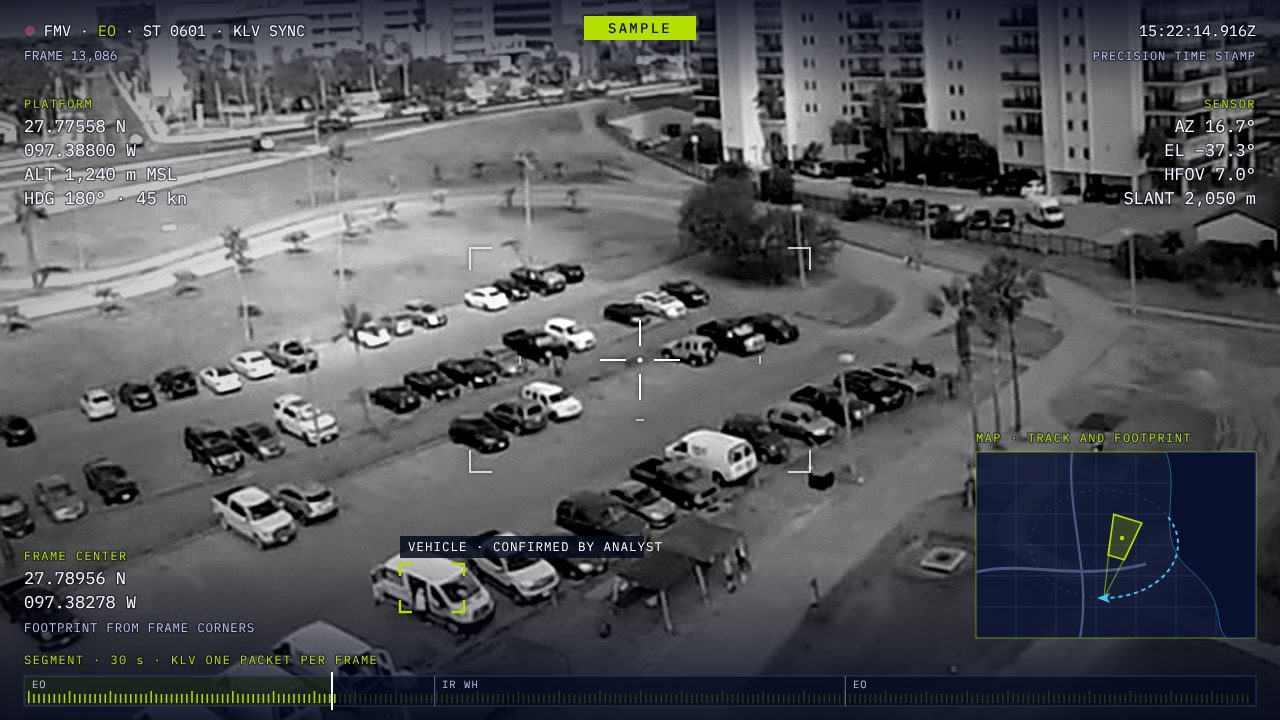
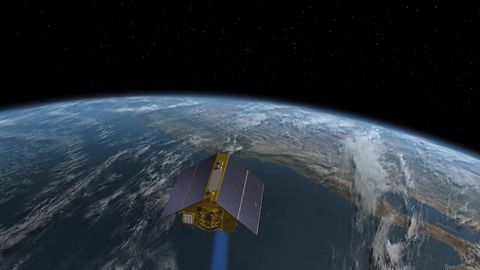
Video: NASA. The metadata on screen is an illustration.
IP or baseband
Transport streams over UDP, RTP, RTSP, SRT or WHIP, and HD-SDI captured beside the camera.
Metadata kept whole
Platform, sensor, detections and marking read from the KLV, frame by frame.
Old and new alike
MPEG-2 archives and Predator-era metadata end as the same records as a current feed.
Every frame on the map
Each frame’s ground footprint beside the video, opening its segment and frame.
WHAT THE EQUIPMENT SENDS
One profile, many connectors
Aerial surveillance video follows one NATO profile: STANAG 4609 Edition 5, which adopts the MISB Motion Imagery Standards Profile. What differs from one system to the next is the connector, not the content.
TRANSPORT
IP transport
MPEG-2 transport stream over UDP or RTP multicast (ST 0804.4), RTSP, SRT and WHIP
Video, KLV and audio streams in one container
Baseband transport
HD-SDI and 3G-SDI (SMPTE ST 292 and ST 424), with KLV in ancillary packets (MISB ST 0605)
Uncompressed video with KLV and a precision time stamp for each frame
PICTURE
Video codec
H.264, H.265, and MPEG-2 video (H.262) for older systems
The picture
METADATA
KLV carriage
ST 1402.2: synchronous, tied to the frame’s time stamp, or asynchronous (SMPTE RP 217)
Which frame each metadata packet belongs to
Platform and sensor
ST 0601.19, the UAS Datalink Local Set
Platform position and attitude, sensor angles, frame center and corners, slant range
Detections
ST 0903.6, Video Moving Target Indicator
Moving targets and tracks the sensor found itself
Security
ST 0102.12
Classification and releasability, mapped to your marking labels
Segments and amendments
ST 1607.2
Corrections and segment-level metadata
Legacy metadata
EG 0104.5, the Predator Universal Set
The fields ST 0601 later replaced, written with 16-byte universal keys
HOW IT’S READ
Four ways in, one record set
Whatever the connector, every source ends in the same records, so detection, the map and your products don’t care where the video came from.
- Video from IP streams and files
- HD-SDI, captured and signed at the edge
- Records: platform, sensor, footprint, detections, marking
01Receive
IP streams and recorded files go through the stream gateway. HD-SDI goes to the edge collector beside the camera, which captures, encodes and signs segments before sending them out, outbound only.
02Segment
Video is cut into 30-second transport-stream segments, with the KLV kept as a stream of its own.
03Read the metadata
KLV is matched to frames by ST 1402’s rules, then read field by field. ST 0601 and mapped EG 0104 become platform and sensor records, ST 0903 becomes detections, ST 0102 becomes the marking, and ST 1607 applies corrections.
04Compute the footprint
Each frame gets a ground footprint from its four corner points, or from the sensor’s pose and the terrain when the corners are missing.
05Use
Detections, the map and the full-motion video player, and every product cite their segment and frame and carry the source’s marking.
HD-SDI WITH KLV
Straight from the turret, metadata included
Many gimbal turrets and helicopter systems send HD-SDI with KLV inside the signal, not an IP stream. SensorLogiX takes it either way.
THROUGH YOUR ENCODER
Your ISR encoder’s stream, unchanged
Where an ISR encoder already takes the camera’s SDI with its KLV and sends STANAG 4609 over IP, that stream goes into SensorLogiX as it is. Nothing new is needed beside the camera.
CAPTURED AT THE EDGE
The edge collector captures SDI itself
Without an encoder, the edge collector captures HD-SDI on an AJA capture card. It reads the ancillary packets, not only the picture, encodes H.264, writes the KLV as a synchronous ST 1402 stream with each frame’s ST 0605 time stamp, and produces the same signed 30-second segments as an IP source. Everything after that is unchanged.
HOW KLV RIDES IN SDI
The metadata travels outside the picture
So capture has to read the ancillary data as well as the image. A card or driver that drops it delivers video with nothing to say where it looked.
- Where the KLV sits. MISB ST 0605 puts KLV in SMPTE ST 291-1 Type 2 ancillary packets with DID 0x44 (SMPTE RP 214).
- VANC or HANC. The secondary ID says where: 0x04 in the vertical blanking interval, 0x14 in the horizontal one.
- A time stamp in every frame. Where a precision time stamp is used, it sits in the vertical ancillary space of every frame, so each frame keeps its own time.
- Both time stamp forms. Older and current revisions of ST 0605 write the time stamp differently; the collector reads both.
A capture that loses its metadata says so. If a card or driver strips the ancillary data, the capture is flagged “KLV missing” and never passed on as complete.
OLDER SYSTEMS
A 2008 recording and a 2026 feed end as the same records
Older aircraft and archives use MPEG-2 video and the metadata set that came before ST 0601. SensorLogiX reads both, so years of footage sit on the same map and timeline as current missions.
2008 RECORDINGARCHIVE
MPEG-2 video (H.262)
EG 0104 Predator Universal Set
A 16-byte universal key per field
06 0E 2B 34 …
2026 FEEDLIVE
H.264 video
ST 0601 UAS Datalink Local Set
Short tags in one local set
5 · 13 · 21 · 23
MAPPED FIELD BY FIELD
Each EG 0104 key to its ST 0601 item
| FIELD | EG 0104 | ST 0601 |
|---|---|---|
| Platform heading | Universal key | tag 5 |
| Sensor latitude | Universal key | tag 13 |
| Slant range | Universal key | tag 21 |
| Frame center latitude | Universal key | tag 23 |
ST 0601 lists the universal key beside each of its items, so the map comes from the standard itself.
SAME RECORDS
One track, one map
- Platform track
- Sensor pose
- Ground footprint
- Segment and frame
Records from the older set say so.
MPEG-2 video
Still part of the STANAG 4609 baseline beside H.264 and H.265. Recordings are decoded in the Main Profile, 4:2:0 form STANAG asks for.
Predator-era metadata
EG 0104, the Predator UAV Basic Universal Metadata Set, writes each field with a 16-byte universal key. SensorLogiX maps it onto the same records as ST 0601 and marks them as read from EG 0104, so you can always tell them apart.
Nothing dropped silently
A key that is in neither set is kept raw and counted. Fields ST 0601 has no equivalent for stay in the raw record.
THE PLAYER
The video and the map, side by side
Watch a mission with its metadata drawn over the picture and its footprint on the map. Every detection opens its segment and frame.
Illustration. Values and imagery are examples.
- Footprint beside the picture. The player draws the KLV over the video and each frame’s ground footprint on the map beside it, moving as the sensor looks around.
- Search by where it looked. Footprints make footage searchable by the ground it covered, not only by where the aircraft flew.
- Detections stay provisional. A mover from the sensor’s own VMTI or from a model is provisional until a person or a second sensor confirms it.
- Every result opens its frame. A detection, an alert or a line in a report opens its segment and frame, with the metadata it was read from.
MARKINGS AND AUTHORITY
The marking comes with the video
The same release rules as every SensorLogiX and DataLogiX product apply from the first frame.
Marked from the source
ST 0102 security metadata becomes the marking on every derived record, clip and product.
Signed at capture
Each segment is signed where it’s captured, so a relay can drop or delay video but can’t alter it unnoticed.
Decided for each reader
Segments, frames and detections are shown only to readers your grants and their marking allow, and every opening is recorded.
Law enforcement under authority
Video from a law-enforcement surveillance source is collected and searched only within a current legal authority, with chain of custody for every segment.
WHAT IT ISN’T
It reads aerial video; it doesn’t fly or steer
- Not a sensor or platform controller. SensorLogiX reads the video; it doesn’t steer the gimbal or fly the aircraft.
- Not wide-area motion imagery. Gigapixel persistent-surveillance imagery isn’t read.
- No face recognition on live video. Faces are matched only after the fact, under your face rules, with two people and a person confirming every candidate.
MORE IN SENSORLOGIX
Other sensors, same records
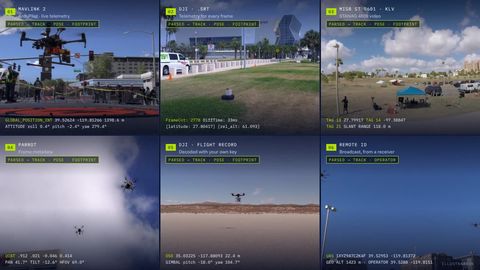 Drone data from any fleetAny fleet’s flights in one record set your reports can cite
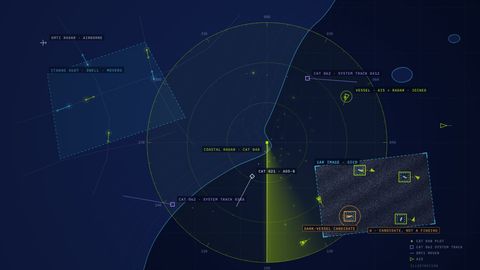 Radar and SARMoving targets, ship tracks and SAR images, joined with AIS
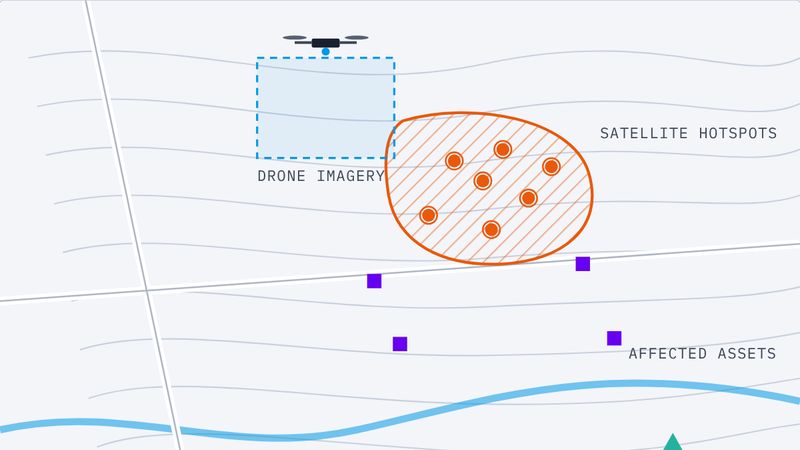 Public safety and civil usesDamage, maritime and police drone reports
 SensorLogiX overviewDrone, radar and video data, as facts in verified reports
WITH DATALOGIX
Footage becomes reports you can stand behind
Keep the workstations you watch with. DataLogiX, our analytics platform, turns what your cameras record into counted, measured and cited facts, and those into reports that leave reviewed and marked.
See DataLogiX