SENSORLOGIX · RADAR
Radar, read as the radar reported it
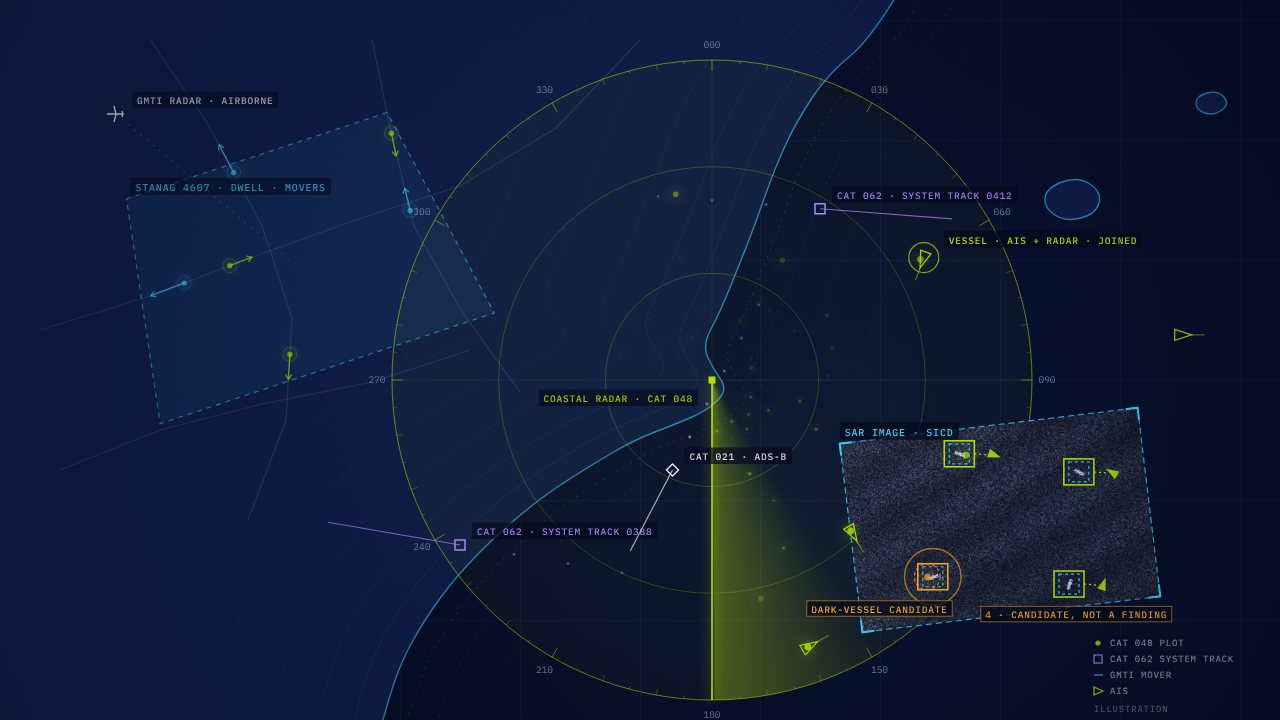
Moving-target reports, air surveillance tracks, ship-radar targets and SAR images become the same observations, tracks, detections and footprints as every other sensor, ready to count, measure and cite in a report.
SensorLogiX reads the finished products your radar, ground station or receiver already sends. Each keeps its stated error, a plot is never mistaken for a fused track, and a ship a model finds in SAR stays provisional until a person or a second sensor confirms it.
The radar picture on screen is an illustration.
Four radar outputs
Moving targets, air tracks, ship-radar targets and SAR images, each in its standard format.
Read as reported
Every message keeps its category and its stated error, so a plot is never mistaken for a fused track.
Ships in SAR, checked twice
A detector trained on SAR, with a deterministic baseline beside every detection it makes.
One picture
Radar joins AIS, ADS-B and video by deterministic gates, and the gate evidence is kept.
RADAR OUTPUTS WE READ
Four products your radar already sends
SensorLogiX doesn’t process raw radar signal. It reads the finished products a radar system, ground station or receiver already emits, and keeps exactly what each one says.
Every format is read by its published standard.
HOW RADAR FLOWS
Four inputs, six stages, the same path as every sensor
Only the parsers and the SAR detector are specific to radar. From the parser on, radar travels the path video, AIS and ADS-B travel, under the same rules.
- Checked path
- Hot path, unverified until checked
- Fusion across sensors
Collect
A relay at the radar site sends data out over mutual TLS and stores it through link drops; nothing connects in. Or your own feed delivers it over your message bus or webhooks.
Hot path to the live map
Tracks go straight to the live map within seconds, marked unverified until the checked path catches up.
Parse
Each message becomes a typed observation or track point, anchored to its source message, with its time, position and the sensor’s stated accuracy as CEP or sigma. The radar is a graded source, graded from its calibration.
Imagery
A SAR image is landed once and stored as an object, never passed around as bytes. It gets a ground footprint, a STAC 1.1 catalog entry and tiles, and its NITF security fields become markings.
Fusion
Deterministic gates on time, distance, speed and heading, plus identifier matches, join one object seen by several sensors into one subject. A GMTI mover, an AIS vessel and a video detection can merge, with the gate evidence kept.
Analysis and products
Watches, geofences and movement patterns; change detection on pairs of SAR images; situation reports that revise as confirmed observations arrive.
Tracks and footprints are stored as geography. Spatial queries pass the same SQL guard as every query, with an allowed list of spatial functions.
READ AS REPORTED
Facts about what the sensor reported, not guesses about the world
Every parsed message keeps the sensor’s own stated error, as CEP or sigma, and its source is graded from the sensor’s calibration.
ASTERIX
A plot stays a plot
A plot is one radar’s detection at one moment; a system track is your tracker’s fused estimate. Each record keeps its ASTERIX category, so SensorLogiX joins them by gates, with evidence, and never relabels one as the other. CAT 021 edition 2.7 isn’t backward compatible, so each edition is decoded and tested on its own.
NMEA 0183
A bearing stays tied to its ship
TTM gives a target’s range and bearing relative to the radar’s own ship. SensorLogiX places it only with that ship’s position and heading at the same moment, read from the feed’s own GPS and heading sentences.
SHIPS IN SAR
Finding ships in SAR, checked by a second method
A ship in SAR is a bright, speckled return on dark water, not a ship-shaped picture, so detectors trained on optical images don’t carry over. SensorLogiX runs a detector trained on SAR, with a deterministic baseline beside every result.
01
Prepare
Amplitude images from SICD, SIDD or ground-range GeoTIFF products, calibrated to sigma-nought, with land masked.
02
Baseline
A deterministic CFAR (constant false alarm rate) detector runs first. It’s also the second method every model detection is checked against.
03
Model
A detector trained on SAR runs on the GPU pool with weights pinned by hash. Each detection is provisional and carries its model, its confidence and the CFAR result beside it.
04
Match AIS
Detections are matched to AIS by time and distance. A ship with no AIS match is a dark-vessel candidate, never a finding.
05
Measure
Precision and recall are measured per sensor, resolution, polarization and sea state. A ship smaller than the image’s resolution supports isn’t reported.
- Trained on licensed imagery. Training uses only imagery whose license allows commercial use, labeled by AIS matching and a person’s review. Datasets with non-commercial terms are excluded.
- No detection reaches a product unconfirmed. A ship found in SAR becomes a fact only when a person confirms it, or when another sensor corroborates it by deterministic association.
- Change over a watch area. Pairs of images are co-registered and compared. Areas and counts in a watch area are bound values, recomputed by a second method.
- Every box opens its pixels. Each detection is anchored to its image and pixel box, so a reader can open exactly what the model and the baseline saw.
HOW RESULTS STAY TRUSTWORTHY
Models propose. Deterministic code decides.
The platform’s rule holds for radar too: nothing a model suggests reaches a report, a map or an alert as a fact until it’s confirmed.
Facts about what was reported
Parsed messages are facts about what the sensor reported, not about the world. Each keeps its stated error, and its source is graded from the sensor’s calibration.
Detections stay provisional
A model’s detection becomes a fact only when a person confirms it, or another sensor corroborates it by deterministic association. A provisional detection can’t be bound as a computed value.
Numbers computed twice
Counts, areas and distances in reports are bound values, each recomputed by a second method. For SAR detections, the second method is CFAR.
Every point traces back
Each map point, track and box is anchored to its source message or image pixel, in every report format.
Confirmed items only, outbound
Cursor on Target to your TAK server, CAP 1.2 alerts and webhooks never carry an unconfirmed model detection.
SECURITY, AUTHORITY AND DEPLOYMENT
Marked from the image, and kept where it’s cleared to be
Markings from the image
NITF security fields become markings on ingest, mapped by each marking scheme you use: US intelligence, CUI or NATO. Every result is checked against the reader’s grants and markings before it’s shown.
Classified stays off commercial cloud
Classified handling runs only on customer-managed, disconnected or enclave deployments, on your own accredited infrastructure.
The same stack, forward
One or two rugged servers with one GPU run the same analysis with offline models, and sync both ways over links that come and go.
See forward deployment →Within a legal authority
For law enforcement, a surveillance source collects, and a query over its records runs, only within a current legal authority. Persistent wide-area tracking without a warrant is refused by default.
WHAT IT DOESN’T DO
Your radar forms the picture. SensorLogiX makes sense of it.
Your radar or ground station hands over tracks, target reports or formed images. These stay with the radar, the ground station or other systems.
MORE SENSORS IN DEPTH
Radar is one of many inputs
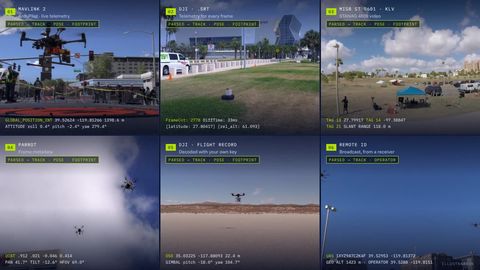 DRONESDrone data from any fleetVideo, telemetry, logs and Remote ID from any fleet, read into one record set your reports can cite.See drones
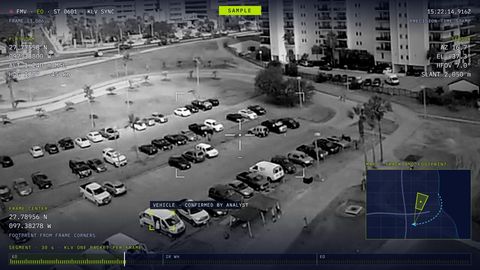 AERIAL VIDEOFull-motion video, frame by frameSTANAG 4609 video and older recordings, read with their metadata so every sighting cites its frame.See aerial video
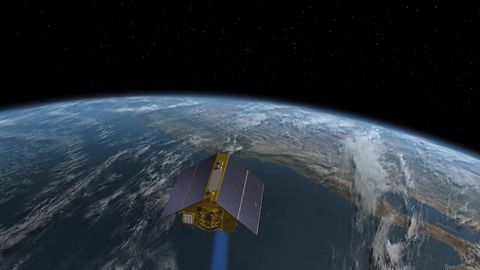 STANDARDSEvery format SensorLogiX readsMotion imagery, radar, maritime, air, drone and ground-sensor standards, and what goes out.See the standards
WITH DATALOGIX
Tracks become reports you can stand behind
Keep the displays you watch with. DataLogiX, our analytics platform, turns what your radars report into counted, measured and cited facts, and those into reports that leave reviewed and marked.
See DataLogiX