SENSORLOGIX · MULTI-DOMAIN SENSING
Video, imagery and tracks from every sensor, in one picture
Full-motion video, imagery, radar and tracks from air, land, sea and space, carried over satellite, airborne, terrestrial or maritime links that drop and come back, and fused into one live picture.
Find any moment in the footage by what it shows, and run detection on your own GPUs at the edge when the data can’t leave. A model’s detection stays provisional until a person or a second sensor confirms it.
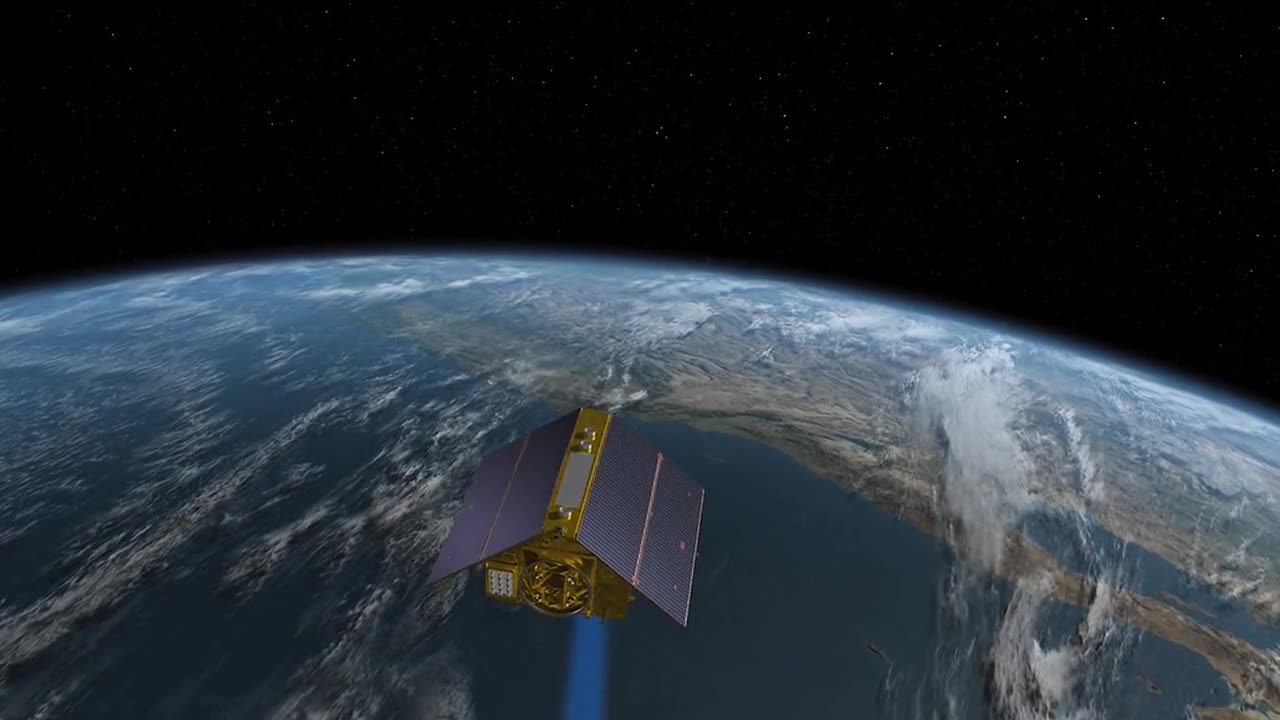
Video: NASA
Air, land, sea and space
Drones, aircraft, aerostats, vehicles, robots, ground sensors, ships, unmanned vessels and imagery providers.
Any link, or none for days
Satellite, airborne relay, terrestrial and maritime bearers, store-and-forward by priority.
Search what the sensors saw
Images and video by what they show, by a similar picture, by time and place, by text on screen.
Your GPUs at the edge
Detection on a managed GPU pool, on GPUs you own, or on the forward node’s, with the same models.
Provisional until confirmed
A model’s guess never reaches a product until a person or a second sensor confirms it.
Released under your rules
Markings from the sensor’s own metadata; release through the same gate as every report.
HOW IT MOVES
Signed at the sensor, carried over any link, fused forward or in the rear
Collectors sign each record where it is captured and send it outbound over whatever link is up. When the satellite link drops, the forward node keeps working and holds the data; when it returns, tracks and decisions go first and both sides sync.
- Tracks, detections and decisions: sent first
- Video segments and imagery
- Sync between the forward node and the rear
SensorLogiX runs over the satellite, airborne, terrestrial and maritime links you already have; it doesn’t supply radios or terminals.
HOW IT WORKS
Six steps, each with one rule that holds connected or not
The rules don’t relax at the edge. A forward node cut off for days applies the same signing, confirmation and release rules as the rear.
Sense
Drones, crewed aircraft and aerostats; ground vehicles, robots, unattended ground sensors, fixed cameras and radars; ships, unmanned vessels, coastal radars and AIS receivers; imagery providers, TAK devices and open feeds.
RULEEvery sensor is a graded source with its platform, calibration and stated accuracy, so copies of one report count once.
Collect at the edge
A collector beside the sensor receives video and feeds, splits out the metadata, cuts video into 30-second segments, signs each one where it was captured, and buffers through a lost link.
RULENothing is uploaded unsigned, and only outbound over mutual TLS.
Move over any link
Segments, tracks and decisions travel over whatever IP bearer is up, by priority, with a bandwidth cap per class.
RULEA segment that arrives after an outage arrives once, with its signature valid.
Fuse and confirm
Every input becomes an observation, a track, a detection or a footprint, anchored to its message, frame or pixel box. Detection runs where a pack enables it, on a managed GPU pool, your GPUs or the forward node’s. Tracks are joined by deterministic gates and by identifiers such as MMSI, ICAO address and Remote ID serial.
RULEA model’s detection is provisional until a person or a second sensor confirms it, and the join keeps its evidence.
Search images and video
Find pictures and moments in video by what they show, by a similar picture, by when and where the file or the sensor says it was taken, and by text on screen or words spoken.
RULEEach result says what kind of evidence it is; a model’s caption or detection is never presented as a fact.
Publish and release
A live map, track facts in search and alerts, a video segment’s detections and situation products that revise as confirmations arrive.
RULEAlerts and confirmed items leave through the same dissemination gate as every report, with their marking. Only confirmed items go to TAK.
IMAGE AND VIDEO SEARCH
Find the moment,
not the file
Months of footage and thousands of images become searchable by what they show, by a similar picture, by time and place, and by the words on screen or spoken. Every result says what kind of evidence it is.
- Decided for each reader. Image and video results follow the same grants, markings, purpose and audit as every search in DataLogiX, and every opening is recorded.
- Every result opens its source. A caption opens its image, a detection its frame and pixel box, a transcript its moment in the clip.
- Off unless a pack turns it on. Captions, tags, similar images, and file time and place are each set per source. GPS is dropped unless the pack keeps it.
- Some things are never inferred. Emotion, age, gender and ethnicity are not read from images or video, and people are never re-identified across cameras.
- Redacted copies for release. Faces, license plates, bystanders and chosen areas are blurred in a derived copy for public release. The original is kept, and the custody log records both.
IMAGE AND VIDEO SEARCH
- Gate camera 2 · 14:32:10Open-vocabulary detection, confirmed by an analystDETECTION · CONFIRMED
- Drone mission · frame 18,402Inside the watch area, from the frame footprintDETECTION · PROVISIONAL
- Patrol photo · 09:12“A white van parked at a loading dock”CAPTION · A MODEL’S DESCRIPTION
- Gate camera 2 · 14:32:14Plate read from the frame, located by boxTEXT IN FRAME
Each result opens its frame or image. Results you aren’t cleared for never appear.
SEARCH BY
A hosted video model may summarize a clip for a person where your model policy allows; the summary is labeled as a model’s description.
ENCRYPTED, DAMAGED AND HOSTILE FILES
Opened when it can be, repaired when it’s broken, held when it’s hostile
Imagery, reports, archives and mail from partners, providers and field teams pass the same intake as every DataLogiX file. Nothing reaches a parser until it has been checked.
Encrypted to you
OpenPGP and S/MIME messages decrypt with keys the source holds. ZTDF files open through your own key service under your grant; nanoTDF files are recognized and held. Purview-protected files and mail open where you grant that right.
Password-protected
Office, PDF, zip and 7z files open with a password supplied once, sealed and destroyed after its attempt, or with standing passwords per source.
Signed
Signatures on PDF, Office, C2PA, OpenPGP and S/MIME content are checked against the source’s registered certificates, and a source can require a valid one.
Damaged
Truncated PDFs, broken archives and Office files, and damaged text, JSON and XML are repaired automatically where possible, with the loss counted and shown. A PDF that can’t be repaired is read page by page from its images.
Messy or unknown
A spreadsheet’s totals must reconcile exactly before it loads. An unknown text layout gets a parser written by a model, run in a sandbox and checked against the source before a person confirms it.
Hostile
The type is decided by content, never by extension; a malware scan fails closed; every archive is walked with limits on ratio, size, members and depth; macros are held by default.
- Plaintext is inspected too. A decrypted or repaired file goes through inspection like any other: health data, identifiers, secrets, prohibited terms and known leaked records are held or redacted by your rules.
- Held files explain themselves. Each held file says why, in words, and what to do next. It is deleted after 30 days unless a pack shortens that.
LINKS AND UPLINKS
Runs over the links you already have
Any IP bearer in the communications plan, primary to emergency, and none at all for days. SensorLogiX doesn’t sell radios or satellite terminals; it makes whatever link is up carry the right data first.
Satellite
GEO, MEO OR LEO
Ships, forward bases and aircraft beyond line of sight.
Primary or alternate backhaul for segments, tracks and decisions; resumes where it stopped after a dropout.
Airborne relay
AIRCRAFT, AEROSTAT OR DRONE
A crewed aircraft, aerostat or drone repeating a link over terrain.
Extends a ground team’s or small drone’s link back to a collector or forward node.
Terrestrial
RADIO, MESH, CELLULAR, FIBER
Line-of-sight radio, mesh networks, cellular, fiber where it exists.
The local link from sensors to the collector, and between forward nodes.
Maritime
SHIP TO SHORE, SHIP TO SHIP
Ship-to-shore and ship-to-ship links, coastal receivers.
Vessel tracks and video from patrol craft and unmanned vessels to a ship or shore node.
No link
HOURS OR DAYS
A ship, base or command post cut off from the rear.
The forward node keeps working alone; everything syncs when a link returns or a drive is carried across.
- Outbound only. Collectors and nodes connect out over mutual TLS. Nothing listens for inbound connections from the network.
- Signed at capture. Each video segment and image is hashed and signed at the edge, so a relay in the middle can drop or delay data but can’t alter it unnoticed.
- Priorities and caps. Tracks, confirmed detections, review decisions and audit go first; raw video goes rear-ward by policy. Transfers resume where they stopped.
- Built for thin links. Tested with tracks and decisions over a 64 kbps link within their priority budget, a six-day partition that ends with both sides agreeing record for record, and 72 hours fully disconnected.
- Rules travel with the data. Every record is checked at sync time against the dissemination rules and markings of both ends, so nothing crosses above the receiving side’s ceiling, and every crossing is logged.
WHEN THE LINK IS THIN
What goes first
- 1Tracks and confirmed detections
- 2Review decisions and audit
- 3Detections awaiting review
- 4Raw video, rear-ward by policy
Priority classes and bandwidth caps are set by policy. Order shown is an example.
FORWARD DEPLOYMENT
Three pieces, placed where the mission needs them
A collector beside each sensor, a forward node where the analysis has to keep running, and the rear service. The collector and the forward node deploy forward; the rear can be the managed cloud or your own accredited infrastructure.
Edge collector
WHERE IT RUNS
Beside the sensor: a ground station, a vehicle, a ship, a tower.
WHAT IT DOES
Receives video (multicast, RTP, SRT, RTSP, WHIP) and feeds, splits out the metadata, cuts and signs segments, buffers through a lost link, uploads outbound only.
BUILT TO
Lose nothing within its disk budget; drop the oldest only where the policy says.
Forward node
WHERE IT RUNS
One short-depth rugged server with one GPU, or two for larger models and failover: on a ship, at a forward base, in a vehicle, at an incident command post.
WHAT IT DOES
The analysis itself, not only collection: feeds, tracks, detection on the local GPU, image and video search, maps, situation products and review, with offline models under the same verification rules. A TAK peer on the local network, and a field mode with offline map tiles, low-bandwidth layouts and controls usable with gloves.
BUILT TO
Military, maritime and vehicle environmental standards, qualified by the hardware vendor. Install from one signed bundle in 30 minutes or less with no network; run 72 hours disconnected with zero outbound connections; zeroize leaves no readable data.
Rear service
WHERE IT RUNS
Managed cloud for unclassified work; customer-managed, disconnected or enclave installs for everything else.
WHAT IT DOES
The full DataLogiX platform: reports, releases, subject search, records and the archive.
BUILT TO
Classified work only on the customer’s accredited infrastructure.
- Hardware built for where it goes. Three tested tiers: a rugged collector box; one short-depth rugged 2U server with a 48 GB GPU; or two servers with a larger GPU, more storage and failover. The kit is built to MIL-STD-810H and MIL-STD-461G, and for ships to MIL-DTL-901E and IEC 60945, with each model qualified by its hardware vendor.
- One signed bundle, offline updates. The forward node installs from removable media with one command and makes no outbound connection. Updates arrive on media as signed bundles; a tampered or unsigned one is refused, and an update can be rolled back.
- A forward profile. It sets what runs forward (feeds, tracks, detection, image and video search, maps, situation products, review) and what stays in the rear.
- Honest when a model is missing. A capability with no local model says so and queues the work; it never answers unverified. Every prompt and answer is screened locally, and if the screener is down, no model call is made.
- Smart cards and its own directory. People sign in with CAC/PIV smart cards. The node keeps its own directory while cut off, mapped to the rear’s on the first sync, so roles, clearances and compartments line up at both ends.
- Sync by link, drive or diode. Sync runs over any link that exists, by encrypted removable drive where none does, and between classification levels only through your cross-domain solution or data diode, with every crossing logged. Facts are append-only; when a decision is revised, the later confirmed one wins and both are kept.
- Evidence for an authority to operate. The software stack runs in FIPS mode, hardened to DISA STIGs, with every component and its license published. Each build generates a control mapping, a hardening baseline, a software bill of materials and scan results for the customer’s authorizing official.
- Encrypted and zeroizable. Disks are encrypted, with keys sealed by the server’s TPM or an HSM. Zeroize destroys the keys, so every disk is unreadable within seconds, then wipes the rest. Runbooks cover setup, sync, zeroize and recovery for a non-developer.
ANALYSIS ON YOUR GPUS
Run the analysis on your own GPUs when you need to
Detection and image analysis run where the data and the link allow: a managed GPU pool, GPUs you already own in your data center or enclave, or the forward node’s GPU at the edge. The models and the rules are the same on all of them.
Managed GPU pool
MANAGED CLOUD
A GPU worker pool that scales to zero, sized by the backlog of video segments, in your organization’s own identity with no outbound network.
WHEN TO USE IT
Unclassified work; bursts after a mission.
Your GPUs
YOUR DATA CENTER OR ENCLAVE
The same signed image on GPUs you own, in a customer-managed, disconnected or enclave install.
WHEN TO USE IT
Data that must not leave your infrastructure, or GPUs you already have.
Forward node
AT THE EDGE
One GPU in a rugged server beside the mission runs detection and image search with no network.
WHEN TO USE IT
Cut-off or thin links: detect forward, send tracks and confirmed detections first, and raw video rear-ward by policy.
CPU only
SMALL INSTALLS
A CPU model for small installs, trials and tests.
WHEN TO USE IT
Low volumes and evaluations.
- Same models, same rules. Each model is pinned by weight hash and permissively licensed, wherever it runs. A detection stays provisional until confirmed, on any hardware.
- Only where enabled. Detection runs only on segments a pack enables: a watch area, a mission or a request.
- Capped and metered. Daily GPU-second caps apply per organization; metering counts video seconds, GPU seconds and track points, so the cost of analysis is bounded and visible.
- Honest when a model is missing. If a capability has no model for the local hardware, it says so and queues the work. It never answers unverified.
DEFENSE AND INTELLIGENCE
From collection to a releasable product, without a guess in it
For ISR, SensorLogiX shortens the path from collection to a releasable product, keeps working at the tactical edge, and never lets a model’s guess reach a product unconfirmed. It informs people; it doesn’t control platforms, steer sensors or support weapons targeting.
- Markings from the sensor. Security metadata in the video (MISB ST 0102) and NITF security fields become the marking on every derived record and portion of the product.
- A mission authority before collection, and person tracking bound by policy.
- Faces never on live streams. After the fact only, under the customer’s face rules, two-person, with a person confirming every candidate.
- Deployment to match. Enclave, disconnected or forward node for classified work; the commercial cloud for unclassified work only.
- Works with TAK, doesn’t replace it. Connects to the customer’s TAK Server as a source and sends confirmed items back as Cursor on Target, each linked to its trace. Off by default per organization.
- Exchange with partners. NATO and US marking schemes, NATO ADatP-4778.2 label bindings, ZTDF through your own key service, lower-marked versions, and releases with receipts and recall. How sharing works
SHARING WITH ALLIES AND PARTNERS
Share with allies, in their own scheme
Products leave in each partner’s own marking scheme and label syntax, encrypted so a key service decides who opens them, and every hand-off is recorded.
In their scheme
NATO, US, UK and TLP markings, read and written in their own label syntax.
Their key service decides
ZTDF through an OpenTDF platform decides who opens each file, every time.
Ready for post-quantum
ML-DSA-65 co-signatures and hybrid ML-KEM-768 key exchange.
RELEASE TO A PARTNER
ISR summary, mission 0417
- Markings. NATO, US classification and CUI, intelligence-community controls, UK Government Security Classifications 2024 and FIRST TLP 2.0, computed per paragraph from the data, including the sensor’s own security metadata (MISB ST 0102, NITF).
- Label syntax. Read on the way in from IC-ISM and STANAG 4774 XML, Purview labels and page banners. Written on the way out as NATO ADatP-4778.2 bindings and IC-ISM XML sidecars beside every exported file.
- ZTDF encryption. The Zero Trust Data Format that allied partners use for data-centric sharing, from the Trusted Data Format (TDF) family. Exports, deliveries, released documents and downloads leave as ZTDF through your own OpenTDF platform, with attributes mapped from their markings.
- Decisions at every open. The key service decides who opens each file every time, and is asked before a report page or an assistant’s answer shows content. Every open and refusal it records comes back matched to the file and its signed transmittal.
- Protected files sent to you. A ZTDF file from a partner is unwrapped through your own key service, under a grant you control and can revoke there. Anything the grant doesn’t cover is held.
- Other keys. Files can also leave encrypted to the recipient’s OpenPGP key and signed with your delivery key, or under Microsoft Purview protection.
- Release rules. Release lists (releasable to named nations), recipient attestation of clearance, compartments, citizenship and need to know, originator consent, and two-person release.
- A version for each audience. A lower-marked version removes what a partner can’t receive, and is proved to keep every judgment and number unchanged.
- Formats and language. NIEM 6.0, Cursor on Target, OGC Moving Features, STAC, EDXL-CAP, GraphML and i2 ANX. Translations keep the original beside them with an A-D grade.
- Required from a level. A pack can require the key service for every item at or above a marking level; such an item without one is refused.
POST-QUANTUM READINESS
Records signed today stay trustworthy, and traffic recorded today stays private
Signatures.
Transmittal records and trace manifests carry an ML-DSA-65 co-signature beside ECDSA. Every signature names its algorithm, so algorithms can change without breaking old records.
Key exchange.
Hybrid X25519 with ML-KEM-768 on connections to the web app, the API and the relay agent through our load balancers, and on SFTP deliveries and watched folders, where the other side supports it.
In an enclave.
The relay agent can run with its FIPS 140-3 mode switched on, and keeps the hybrid key exchange there. The post-quantum signing key is off by default.
Tested in CI on every change against the open-source OpenTDF platform: an export, a delivered report and a numbered copy leave as ZTDF, the entitled reader opens them, another is refused, and both decisions come back matched to the file. Off by default per path; a ZTDF recipient needs an OpenTDF-capable client.
WITH DATALOGIX
SensorLogiX senses. DataLogiX proves.
SensorLogiX is a separate offering that adds sensing, image and video search, and analysis on your own GPUs to DataLogiX. Confirmed observations flow into DataLogiX, which turns them into verified reports, governed search and controlled releases under the same rules, markings and audit.
STANDARDS
Reads sensor data in its standard formats
So no platform has to change to feed it. Tactical data links (Link 16, JREAP) are read only through a customer gateway that emits Cursor on Target.
Motion imagery
STANAG 4609 Ed. 5; the MISB Motion Imagery Standards Profile; ST 0601, ST 0102, ST 0903, ST 0107, ST 1402, ST 0604
Video transport
MPEG-2 transport stream over UDP and RTP multicast; RTSP 2.0; SRT; WHIP (RFC 9725); H.264 and H.265
Still and radar imagery
NITF 2.1 / STANAG 4545; GeoTIFF and Cloud-Optimized GeoTIFF; JPEG 2000; SICD 1.3 and SIDD 3.0; STAC 1.1; OGC API Tiles and WMTS
Moving-target radar
STANAG 4607 Ed. 3
Tracks
Cursor on Target (XML) and TAK Protocol version 1, to the customer’s TAK Server
Maritime
AIS per ITU-R M.1371-6 over NMEA 0183; radar target messages (TTM, TLL); IHO S-57 charts as context
Air
ADS-B (DO-260B, DO-260C); ASTERIX categories 021, 048, 062
Drones
FAA Remote ID (14 CFR Part 89, ASTM F3411-22a); MAVLink 2
Robots and ground sensors
ROS 2 recordings (MCAP); SAPIENT (BSI Flex 335 v2.0); OGC SensorThings API 1.1; SensorML 3.0; MQTT 5; JAUS through a customer gateway
Labels and protected exchange
IC-ISM and STANAG 4774 labels read; NATO ADatP-4778.2 bindings and IC-ISM sidecars written; ZTDF through your OpenTDF platform; OpenPGP; S/MIME; Purview
Post-quantum
ML-KEM-768 hybrid with X25519 for key exchange; ML-DSA-65 co-signatures on transmittals and traces
Out
OGC Moving Features JSON 1.0; EDXL-CAP 1.2; Cursor on Target to TAK; NIEM 6.0; court exports per SWGDE 18-V-001-2.0
Detection models are pinned and measured. Object detection, multi-object tracking, optional segmentation and open-vocabulary detection (“a white van”) use models pinned by weight hash and permissively licensed. Models under AGPL or platform licenses, or with military-use restrictions, are never shipped. Precision and recall are reported per class with 95% intervals and shown beside the detections. Captions, similar-image search and detection also have open-source models that run with no network.
WHAT IT ISN'T
SensorLogiX is not a command and control system, a weapons system or an exploitation workstation
Saying so plainly is part of the product. SensorLogiX informs people and proves what they release.
- Platform, sensor or weapon control.
- Link 16 and JREAP directly (only through a customer gateway).
- Sonar processing, radar video processing, and image formation from raw radar phase history.
- Automated image geolocation without metadata.
- Face recognition on live video.
- Emotion, age, gender or ethnicity inference from images or video.
- Its own TAK Server, AIS receivers or satellites: it uses the customer’s, or a provider’s as a source.
- Imagery exploitation workstation tools (mensuration, photogrammetry, wide-area motion imagery).
- Opening nanoTDF files: they are recognized and held.
OFF BY DEFAULT
- Detection, per pack
- Image captions, tags, similar images, and file time and place, per source
- Face matching, only under your pack with a signed attestation and two people
- ZTDF wrapping and the post-quantum signing key, per path and by the operator
- Cursor on Target out to TAK, per organization, confirmed items only
- Law-enforcement surveillance sources, with a legal authority on file
- Person tracking for civil organizations